








It’s not uncommon for retirement planners to warn against letting emotion unduly influence investment decisions. But is there data to support the claim that such decisions negatively impact the average investor’s returns?
Yes.
Where Investor Return Data Comes From
The insights were gathered by DALBAR, an independent financial research firm best known for measuring the gap between investor returns and market returns. Its annual Quantitative Analysis of Investor Behavior (QAIB) report measures how the average individual investor performs relative to market indexes. Unlike traditional market studies, QAIB does not assume perfect buy-and-hold behavior. Instead, it measures what investors really earn after accounting for the decisions they make along the way.
How Investor Returns Are Measured
QAIB estimates investor returns by analyzing changes in fund assets and cash flows relative to market performance, capturing the timing and magnitude of investor buying and selling. This includes realized and unrealized capital gains, dividends and interest, trading costs and sales charges, fees and expenses, and taxes triggered by buying and selling.
In short, these results reflect the impact of buys, sells, switches, redemptions, and timing decisions—not just market performance in theory.
The Role Of Emotion During Market Volatility
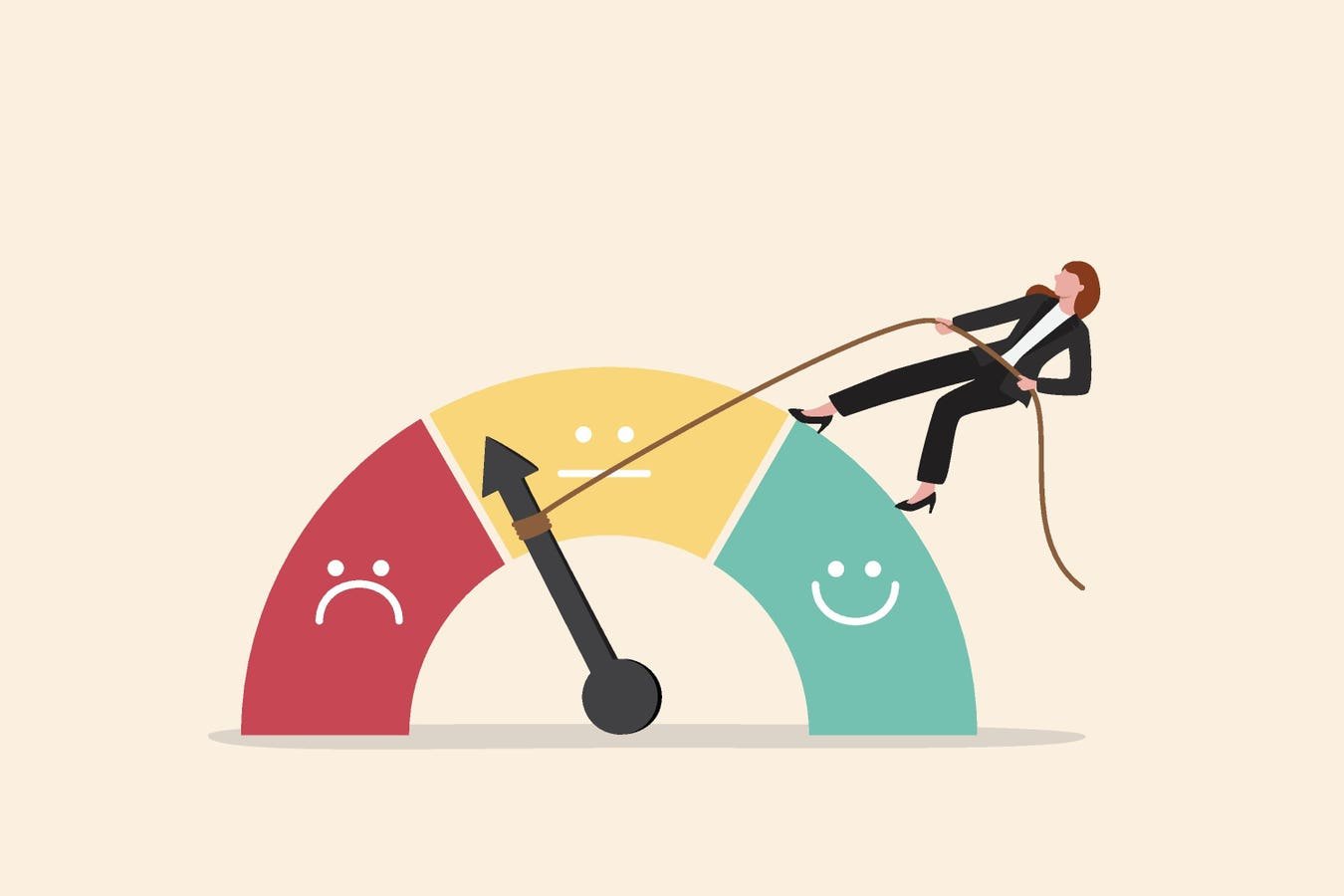
Much of the trading, switching, and reshuffling ultimately traces back to the emotional decision-making that market volatility can trigger. Some individuals manage to remain disciplined, but for the average investor, emotional reactions to market volatility can often lead to poor timing decisions. This could mean selling after declines, buying after rallies, and reacting to fear or greed rather than sticking to a plan.
The QAIB data suggest that this behavior may have a measurable and costly impact on long-term results.
Why Staying Disciplined Is So Difficult
The challenge of disciplined investing isn’t easily avoided. Individuals attempting to preserve purchasing power over time can’t simply hide cash under the mattress. Despite its turbulence, the stock market typically remains one of the most effective ways to grow money over the long term.
Measured on a total-return basis, the S&P 500 has increased by multiple times its value since the mid-2000s, reflecting significant cumulative growth over long holding periods when dividends are reinvested. Inflation has eroded the purchasing power of the U.S. dollar by roughly 40% over the past two decades, based on CPI data. Therefore, uninvested individuals run the risk of wilting dollars.
The Emotional Cost Of Long-Term Market Returns
While market history reveals generally strong long-term returns, the path to those returns has been anything but smooth.
Since 1928, the S&P 500 has delivered an annualized total return of roughly 10–12% when dividends are reinvested. Over that same history, the average intra-year decline has been about 16%, even in years that finished positive.
In practical terms, that suggests meaningful pullbacks have been a regular feature of many market years. Each decline arrives with its own narrative, perhaps providing investors a reason to believe, “This time might be different.” The stress and fear of staying invested through short-term fluctuations is the emotional cost of earning long-term market returns and outpacing inflation.
The Return Gap Between Markets And Investors
According to DALBAR’s long-running QAIB, average investors have historically earned less than the market benchmarks they invest in. Over the past decade, DALBAR estimates the average equity fund investor earned roughly 9.8% annually, compared with an annualized return of about 13% for the S&P 500. The average asset-allocation fund investor earned closer to 4%, versus approximately 8% for a balanced 60/40 portfolio, a commonly cited benchmark summarized in J.P. Morgan Asset Management’s Guide to the Markets.
A longer view shows a similar pattern.
Looking back over roughly the past two decades, U.S. stocks have delivered annualized returns of about 10%, while a balanced 60/40 portfolio has historically produced returns closer to the mid-to-high single digits. By contrast, DALBAR’s QAIB estimates that the average asset-allocation fund investor earned closer to the low single digits over the same period.
Fixed income tells a similar, though more muted, story. Over long periods, the Bloomberg U.S. Aggregate Bond Index—a widely used measure of the investment-grade U.S. bond market—has delivered average annual returns in the low-single-digit range, while DALBAR data indicate that the average fixed-income fund investor has frequently earned materially less over comparable timeframes. Together, these comparisons suggest that even traditionally lower-volatility asset classes have not been immune to the effects of investor behavior during periods of changing interest-rate and market conditions.
While results vary by time period and methodology, the directional gap between investor returns and market returns has been a consistent feature of long-term data, and this “return gap” is often associated with investor behavior rather than market performance itself.
What Drives The Return Gap?
Poor asset classes or low-quality funds do not primarily explain the gap between market returns and investor returns. Instead, it is driven mainly by how investors behave over time.
Research from DALBAR and other academic sources suggests that investors tend to:
- Buy after a strong performance, when valuations are higher
- Reduce exposure after market declines, often locking in losses
- Switch funds frequently, increasing the risk of mistimed entry and exit
- React emotionally to volatility rather than following a disciplined plan
As a result, even when investors use broadly diversified, low-cost funds that closely track market benchmarks, their realized returns often fall meaningfully short of the market’s long-term performance.
In other words, the investment vehicles themselves are usually not the problem—the timing of decisions around them is.
Why Investment Discipline Is Simple, Not Easy
Closing the return gap doesn’t require market clairvoyance or lucking into the next hot investment. It requires discipline.
Simplify The Investment Approach.
Low-cost funds and ETFs are often referenced as ways to avoid exotic products and unnecessary complexity.
Create A Written Investment Plan.
Whether handwritten or software-based, a plan can provide something rational to lean on when emotions spike.
Build Education Around Market Volatility.
Understanding how often markets decline—and accepting volatility as inevitable—may help future retirees stay invested. Volatility is sometimes described as the admission price.
Maintain Diversification And Portfolio Balance.
While diversification won’t eliminate declines, it can help reduce emotional stress and improve the odds of long-term persistence.
Bottom Line: Investor Behavior Often Matters More Than Markets
One of the biggest threats to long-term investing success is human, not market, volatility. Emotional decision-making can undermine returns when people overreact to perfectly normal market movements.
History shows that investors may improve their odds of capturing more productive returns when they remain disciplined, stay invested, and follow a simple plan.
This information is provided to you as a resource for informational purposes only and is not to be viewed as investment advice or recommendations. Investing involves risk, including the possible loss of principal. There is no guarantee offered that investment return, yield, or performance will be achieved. Stock prices fluctuate, sometimes rapidly and dramatically, due to factors affecting individual companies, particular industries or sectors, or general market conditions. For stocks paying dividends, dividends are not guaranteed, and can increase, decrease, or be eliminated without notice. Fixed-income securities involve interest rate, credit, inflation, and reinvestment risks, and possible loss of principal. As interest rates rise, the value of fixed-income securities falls. Past performance is not indicative of future results when considering any investment vehicle. This information is being presented without consideration of the investment objectives, risk tolerance, or financial circumstances of any specific investor and might not be suitable for all investors. There are many aspects and criteria that must be examined and considered before investing. Investment decisions should not be made solely based on information contained in this article. This information is not intended to, and should not, form a primary basis for any investment decision that you may make. Always consult your own legal, tax, or investment advisor before making any investment/tax/estate/financial planning considerations or decisions. The information contained in the article is strictly an opinion and it is not known whether the strategies will be successful. The views and opinions expressed are for educational purposes only as of the date of production/writing and may change without notice at any time based on numerous factors, such as market or other conditions.
Read the full article here