












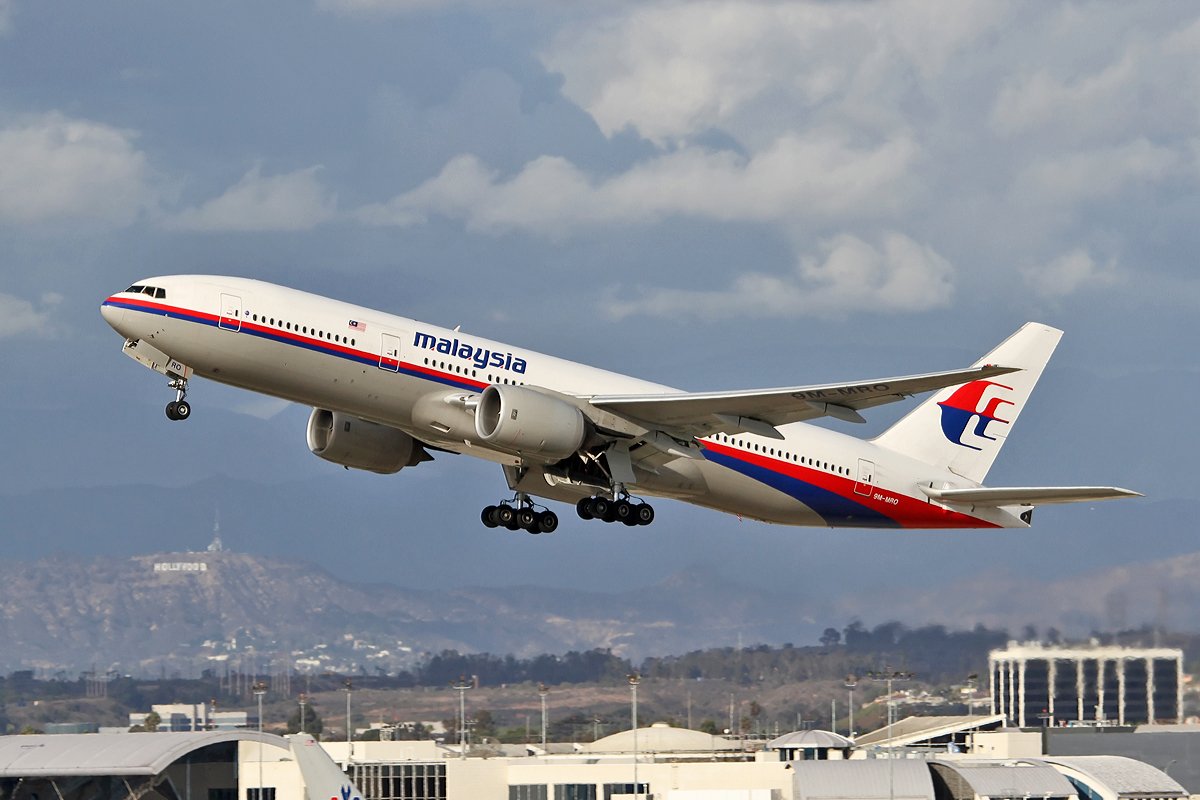
The Malaysian government recently announced the resumption of the search for Malaysia Airlines Flight 370 in the remote depths of the Indian Ocean.
The contract, awarded to U.S.-based firm Ocean Infinity on a no-find, no-fee basis, aims to finally locate the aircraft that vanished on March 8, 2014. The search is underway and has predictably sparked a fresh wave of commentary, speculation, and YouTube videos. Most of it, however, is little more than clickbait, exploiting the flight’s reputation as “the greatest unsolved mystery in aviation history.” Theories range from remote-control hijacking and onboard fires to an elaborate Russian plot and even claims of a U.S. military shootdown.
The reality is far simpler. For anyone who has actually examined the evidence, MH370 is not especially mysterious. Captain Zaharie Ahmad Shah hijacked his own aircraft, incapacitated everyone on board by depressurizing the cabin, and then deliberately flew the Boeing 777 into the southern Indian Ocean. The evidence supporting this conclusion is not circumstantial or speculative. It is overwhelming, methodical, and points unambiguously to that single explanation.
The Simulator Evidence
In the weeks before the disappearance, Shah conducted flight simulator sessions at his home in Kuala Lumpur that were anything but routine. He had programmed and flown a route beginning in Kuala Lumpur, proceeding northwest up the Strait of Malacca, then turning south into the remote southern Indian Ocean before fuel exhaustion.
This route closely matches the path MH370 actually flew, based on initial radar tracking and subsequently discovered satellite data. The simulation ended in one of the most remote regions of the Indian Ocean, thousands of miles from any diversion airport. The probability of this being coincidental is effectively zero. There is no innocent explanation for why a pilot would practice flying from his home airport into one of the most isolated areas on Earth, then weeks later fly that same route with 238 people aboard.
The Hijacking
MH370 departed Kuala Lumpur at 00:41 on March 8, 2014, bound for Beijing. At 01:19, the flight sent its final transmission: “Good night Malaysian three seven zero.” Less than two minutes later, the transponder was disabled, precisely at the handoff point between Malaysian and Vietnamese airspace. This maximized the delay before either country would realize something was wrong.
The aircraft then made a turn and flew back across the Malay Peninsula. At 01:52, it passed over Penang, Shah’s home city. The flypast served no operational purpose. While the precise motives behind Shah’s actions remain unknown, the most plausible explanation for this part of the flight is that it was a final symbolic goodbye.
After passing Penang, MH370 turned northwest up the Strait of Malacca, blending in with other air traffic on the busy route, before making a final turn south into the Indian Ocean. The aircraft then flew for approximately six more hours until the engines flamed out from fuel exhaustion. It entered a rapid descent and broke up on impact at high speed.
Incapacitation
The most likely method of neutralizing everyone on board was cabin depressurization. At 35,000 feet, passengers and crew would have only 15 to 30 seconds of useful consciousness before hypoxia incapacitated them. The emergency oxygen masks provide just 12 to 20 minutes of supplemental oxygen, enough for a normal emergency descent but insufficient if the aircraft remained at cruising altitude, as it did. Almost certainly, everyone in the passenger cabin would have died within 20 minutes.
As for the co-pilot, it is unclear how Shah dealt with him, but he may have sent him to the passenger cabin under a pretext and then locked him out of the cockpit, exactly as another suicidal pilot, Andreas Lubitz, did in the Germanwings disaster in 2015. The flight deck has its own separate oxygen supply, which would have been more than sufficient for the captain to remain conscious for many hours.
Why the Almost Perfect Crime Failed
Shah’s apparent plan was meticulous and nearly succeeded. Three key factors, however, prevented it from being truly perfect.
First, the FBI, brought in by Malaysian investigators, painstakingly recovered the deleted flight simulator data. Shah had erased and reformatted the drive before his suicide flight, almost certainly believing the deletion was permanent. This posed a major forensic challenge. FBI analysts, however, were able to restore the data, revealing he had practiced almost the exact route into the remote Indian Ocean that he later flew on his final, fatal flight.
Second, Shah likely did not know about the satellite handshakes. Even with all other communication systems turned off, the aircraft continued sending automated hourly pings to an Inmarsat satellite throughout the flight. This obscure feature allowed investigators to track the plane along a curved line, or “arc,” showing how far it was from the satellite at each hourly ping.
On its own, this information could not pinpoint the crash site. What Shah almost certainly did not know, and what even took investigators some time to figure out, was a small quirk in the system. When the engines finally flamed out, the plane’s auxiliary power unit briefly restarted the communications system, sending one final ping. That single transmission revealed the arc where the aircraft had gone down, reducing the search area from millions of square miles to a few tens of thousands. That is still a huge area but within practical reach.
Third, there was no controlled ditching. A controlled water landing would have been far more effective at hiding the wreckage, similar to the “Miracle on the Hudson.” A successfully ditched aircraft could have sunk largely intact in thousands of meters of water, leaving minimal traces. Even if the plane had broken apart due to higher waves than on the Hudson, a controlled landing would still have greatly limited the debris.
Instead, the aircraft plunged into the ocean at high speed, creating a massive debris field, some of which eventually washed ashore in Mozambique, South Africa, and Madagascar. Investigators were able to use ocean current modeling to backtrack and narrow the probable crash area.
The most plausible explanation for why Shah did not attempt a controlled ditching is psychological. Seven hours alone after committing mass murder is an extreme and unpredictable situation, and no one can know how he would react. Once the aircraft was on its final southbound course, there was nothing left to do but wait. Rather than endure another six hours of consciousness, Shah may have removed his own oxygen supply, allowing hypoxia to take him just as it had everyone else.
Case Closed
All the evidence points to a single, incontrovertible explanation. So why do so many alternative theories persist? Partly because clickbait dominates social and other media, and partly because it is psychologically easier to believe in mysteries than to confront uncomfortable truths.
Accepting that one man deliberately killed 238 other people with the flick of a button is far more disturbing than imagining elaborate conspiracies. Finding the wreckage may provide closure and silence the most absurd claims. In reality, however, the mystery has already been solved. MH370 happened exactly one way, and we know what that way was.
Read the full article here