







In a new announcement on social media, Centers for Medicare and Medicaid Services Director Mehmet Oz said that federal officials believe they’ve found billions of dollars in medical fraud in California, along with other forms of not-yet-fully-quantified social services fraud that make Minnesota look like a minor criminal fiefdom by comparison. There’s an enormous hidden problem with fraud on that scale, and breaking up the grift is going to be harder than Americans might think. To see that problem, start by looking at a single criminal complaint that was recently filed in federal court.
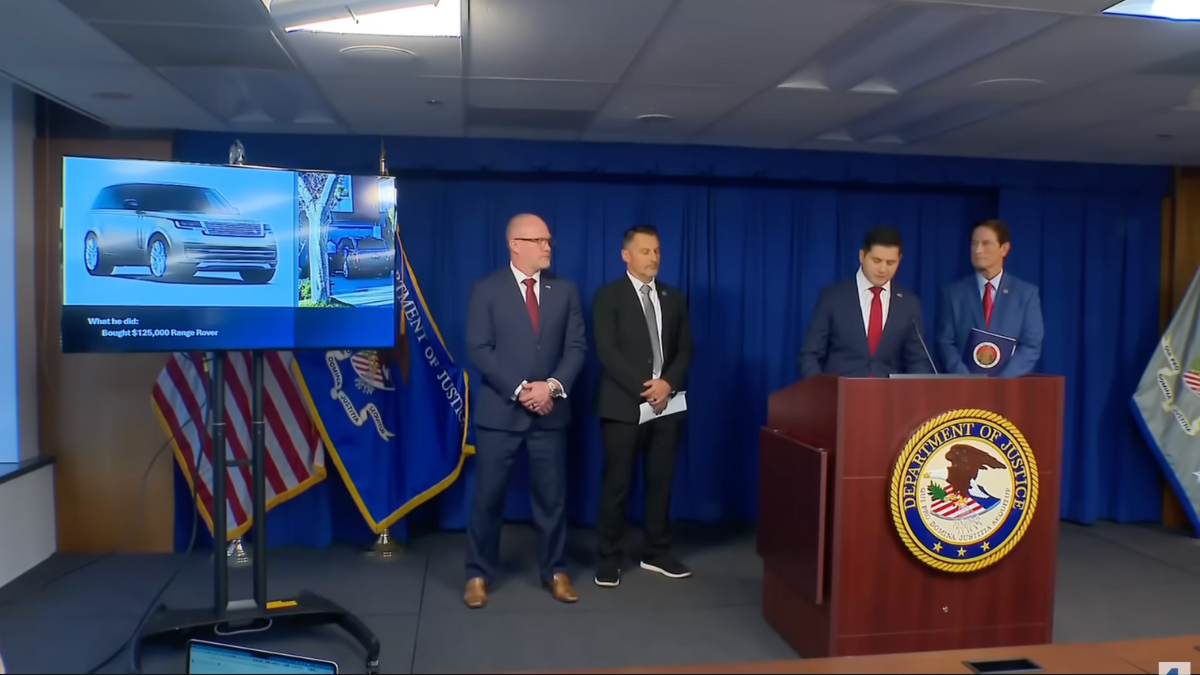
Federal prosecutors charged a Los Angeles resident named Alexander Soofer last week with a whole bunch of wire fraud, after he allegedly helped himself to at least $10 million from the $23 million in public funds he was paid to house and feed homeless people.
Soofer controls or has controlled at least nine limited liability corporations and general corporations, and federal prosecutors allege that he also created a long list of fake companies with names that closely resembled the real names of well-known companies that provide services like catering, construction, and security. But the fake companies belonged to Soofer, the government says, so the invoices he submitted to public agencies showing his payments to other businesses just reflected checks Alex Soofer was writing to Alex Soofer, funds flowing from one of his bank accounts to one of his other bank accounts.
Not all of Soofer’s business activities made it into the complaint, and property records also show that his nonprofit homeless services corporation — Abundant Blessings, Inc. — sold real estate to a guy named Alexander Soofer, who transferred them to his LLCs, using the services of a real estate broker named Alexander Soofer to handle the transactions. Among the many other outstanding questions are those about a now-defunct corporation Soofer controlled called Los Angeles Public Health Medical Center, which operated out of a post office box in Brentwood. I asked Soofer by email what services that company provided, but received no reply. I also spent the weekend visiting the declared address of his corporate headquarters, an apartment building in South Central Los Angeles with no sign marking the presence of a business, and his $7 million house in Westwood, but I have yet to speak with him.
Unraveling all of that allegedly fraudulent activity took at least five separate government agencies. Investigators from the office of the Los Angeles City Controller said they visited Soofer’s homeless shelters and found they weren’t providing the services they were being paid to provide. Investigators from the Los Angeles Homeless Services Authority, a city-county joint powers agency, asked for invoices. FBI and IRS Criminal Division special agents subpoenaed bank and credit card records, identified at least one employee with inside information who could provide testimony, and visited every sound-alike contractor to prove that the supposed invoices weren’t theirs. And federal investigators met with the employee to offer immunity in exchange for testimony. The Los Angeles County District Attorney has also filed a separate set of charges, so maybe we should count that as a sixth agency.
So, at the very least, five or six agencies chased dozens of witnesses, nine LLCs and general corporations, an untold number of other allegedly fake companies, a long list of bank accounts, a countywide network of real estate, and a series of credit card statements, the latter producing detailed statements in the complaint about the luxury goods Soofer allegedly purchased using public funds. His wife apparently has some quite nice Hermes sandals that Los Angeles taxpayers bought her, if the FBI is correct. I attempted to get more information from the city controller who started the ball rolling, but his office has yet to respond to questions. I’ve never once found that the FBI answers questions about its investigations, so I haven’t bothered to ask them about it.
Read the complaint linked above and form your own conclusion, but an educated guess is that it’s a description of hundreds of hours of investigation, and maybe more. It continues, and they’re clearly still digging.
Now, Soofer allegedly represents about $10 million in local fraud, and Mehmet Oz says that just the category of medical fraud in just that one county probably amounts to about $3.5 billion a year. In Minneapolis, Nick Shirley is visiting single addresses listed in public records as the office for multiple businesses that can’t actually be found there, and the X user who posts as Data Republican is suggesting that some single addresses in the city are actually the address of record for hundreds of potentially fraudulent businesses.
Do the math in your head: How many cops, doing how many hours of investigation, will it take to unravel tens of billions of dollars of overlapping fraud in government-funded health care, transportation, daycare, and homeless services nonprofits, in California and Minnesota and wherever else large numbers of nonprofits chase a massive pool of federal, state, and local public funds?
Americans are quite lightly policed, and should be. I live in a suburban town of about 27,000 people that tends to have four or five police officers on duty. Minneapolis has a population of close to half a million people, and the city is working with around 600 sworn officers (while the city charter says it requires a minimum police staffing of 731 cops, a number the city can no longer hope to reach). In a nation of 340 million people, the FBI has 13,700 special agents. We’re not a country that maintains a culture of honesty through coercion and punishment, or expects to. Our police do their work at the margins and are funded and staffed on the premise that they’re chasing small numbers of bad guys in a population of honest citizens. If that cultural premise fails, we don’t have the cops to fix it.
The first place to stop fraud is with a healthy culture. The second place to stop it is in a limited government that doesn’t offer a bunch of free cash for thieves to steal. The third solution, investigations and arrests, is clumsy, slow, and likely to prove grossly inadequate.
Two competing memories guide my idea of the cultural solution. First, on a road trip through the small town Midwest, this Los Angeles resident kept stopping at grocery stores and post offices where people baffled me by leaving their cars running — windows down, keys in the car — while they went inside for 10 or 20 minutes to do their business. They assumed, on long evidence, that they were safe from their neighbors, who would not and did not steal.
But second, in Kuwait, as a soldier in 2006, I watched as military arrests piled up and an officer in charge of Iraq War logistics killed himself. In the Middle East, people bidding for giant government contracts politely showed up with suitcases full of cash for the officials who approved the contracts. Of course they did. That’s how business is done, right?
In much of the world, that’s the daily organizing presumption. If there’s a bucket of money, somebody’s going to be shrewd enough and tough enough to take from it, so why would you be weak enough to not grab your share?
The more we undermine the first culture and import the second, the more we’re going to foster public services fraud. That’s not what we want to do.
Read the full article here