








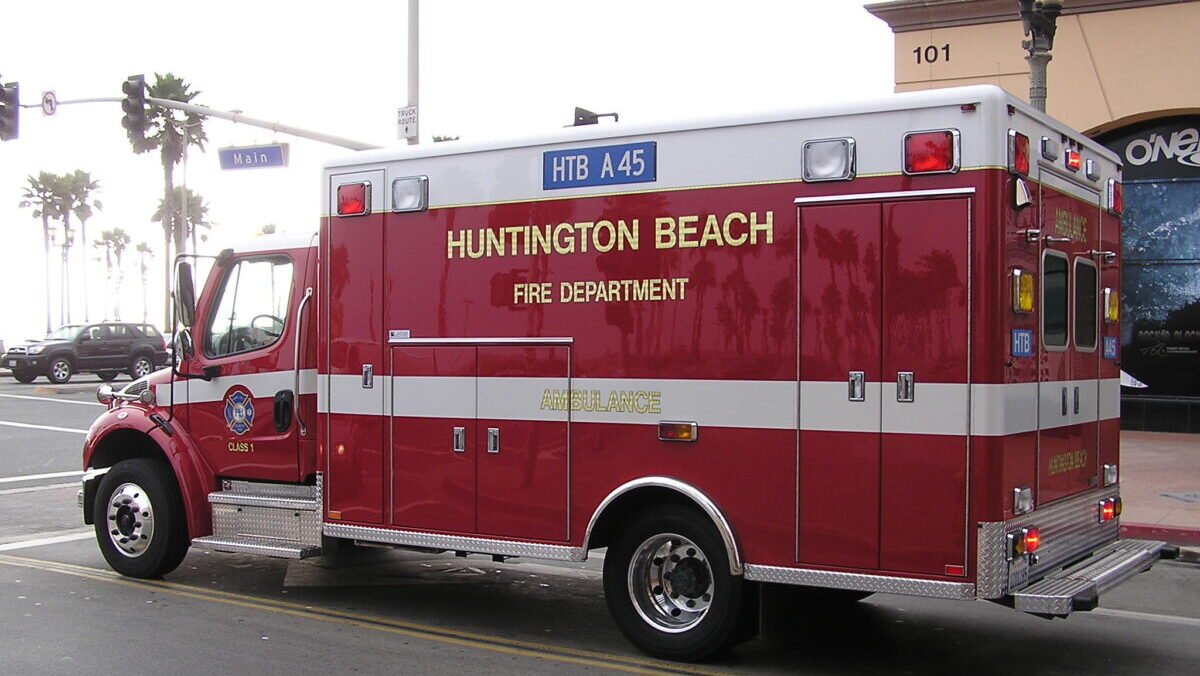
Across the country, Democratic governors have quietly embraced an unchecked budget gimmick: using Medicaid financing schemes to funnel federal money into state and local budgets under the guise of emergency medical funding. Last month, prosecutors announced an estimated $9 billion in fraudulent billing in Minnesota, illustrating how quickly these schemes can spiral into industrial-scale abuse. Nowhere is this grift more advanced than in California, where a complex ambulance reimbursement model that is nothing short of legal Medicaid fraud has been picking taxpayers’ pockets across the U.S. for years.
California’s politicians routinely warn that emergency services are underfunded and overstretched. But behind that claim sits a financing structure that deserves far more scrutiny from federal regulators and, potentially, prosecutors.
Across California, public fire departments now dominate emergency medical response, and their payroll records show it. Firefighters routinely earn $300,000, to $600,000 a year, once overtime and benefits are included, with senior officers approaching $700,000. Yet, federal data shows that only a small fraction of fire department activity involve fires. Nationwide, roughly two-thirds of fire department responses are emergency medical or rescue calls, while about 4 percent involve fires. In California’s largest jurisdictions, the shift is even more pronounced. Major fire agencies report that around 80 to 85 percent of their calls are medical, not fire related. Smaller departments report similar ratios.
Despite functioning primarily as ambulance providers, fire departments are still staffed and pensioned like fire suppression forces. That distinction matters because medical response is financed differently, particularly under Medicaid.
California has built an ambulance reimbursement system that relies on intergovernmental transfers, or IGTs. Under this model, public fire agencies claim ambulance costs three to five times higher than private ambulance providers performing the exact same service. Those inflated costs are then used to justify higher Medicaid payments, which release additional federal matching funds. A portion of the payment is returned to the state through an IGT, while the fire agency keeps the balance.
Private ambulance providers are excluded from this arrangement.
The disparity is significant. Government-run fire agencies receive more than $1,000 per Medicaid transport, while private providers are paid roughly $339. California is now seeking federal approval from the Centers for Medicare and Medicaid Services to push that gap even further to nearly $1,600 per transport — despite performing the same medical service for the same patients.
Improper Claims
Federal Medicaid law requires that payments be reasonable, necessary, and based on costs actually incurred by the provider furnishing the service. When public agencies report inflated expenses, recycle costs through accounting maneuvers, and retain payments untethered from actual service delivery, the line between aggressive financing and improper claiming begins to blur.
That risk is even higher in the many California communities where fire agencies subcontract virtually all ambulance operations to private companies, then claim the higher cost as their own and keep the difference between what Medicaid pays and what the private provider receives.
That is not merely a policy concern. It is the type of arrangement that has historically attracted scrutiny from the Department of Justice under the False Claims Act.
The legal exposure does not end there. Revenues generated through these arrangements often feed structural costs, including early retirements and six-figure pensions, embedding the risk deep into municipal budgets. If federal regulators later disallow the payments, the liability does not disappear. It shifts to cities, counties, and ultimately taxpayers.
Enforcement Needed
None of this is an argument against fair pay for firefighters. Emergency responders perform difficult and often dangerous work. But Medicaid is not intended to function as a revenue arbitrage tool, nor as a backdoor subsidy for compensation structures that local governments would struggle to sustain on their own.
Underfunded emergency response does not justify states turning Medicaid into a revenue machine. California may be leading the way, but the pattern is spreading in other blue-state capitals that have grown dependent on “recycling” Medicaid dollars through creative public financings schemes.
As federal oversight of Medicaid financing intensifies, California’s effort to further increase ambulance IGT payments looks less like routine policy and more like an enforcement question waiting to be answered.
Read the full article here