











A virus that officials say “has a relatively high death rate” has led to COVID-style health checks at several airports in Asia.
Five people in in West Bengal, India, have contracted the Nipah virus, according to the Thai government, while India’s National Center for Disease Control reported the outbreak is limited to two districts on Sunday.
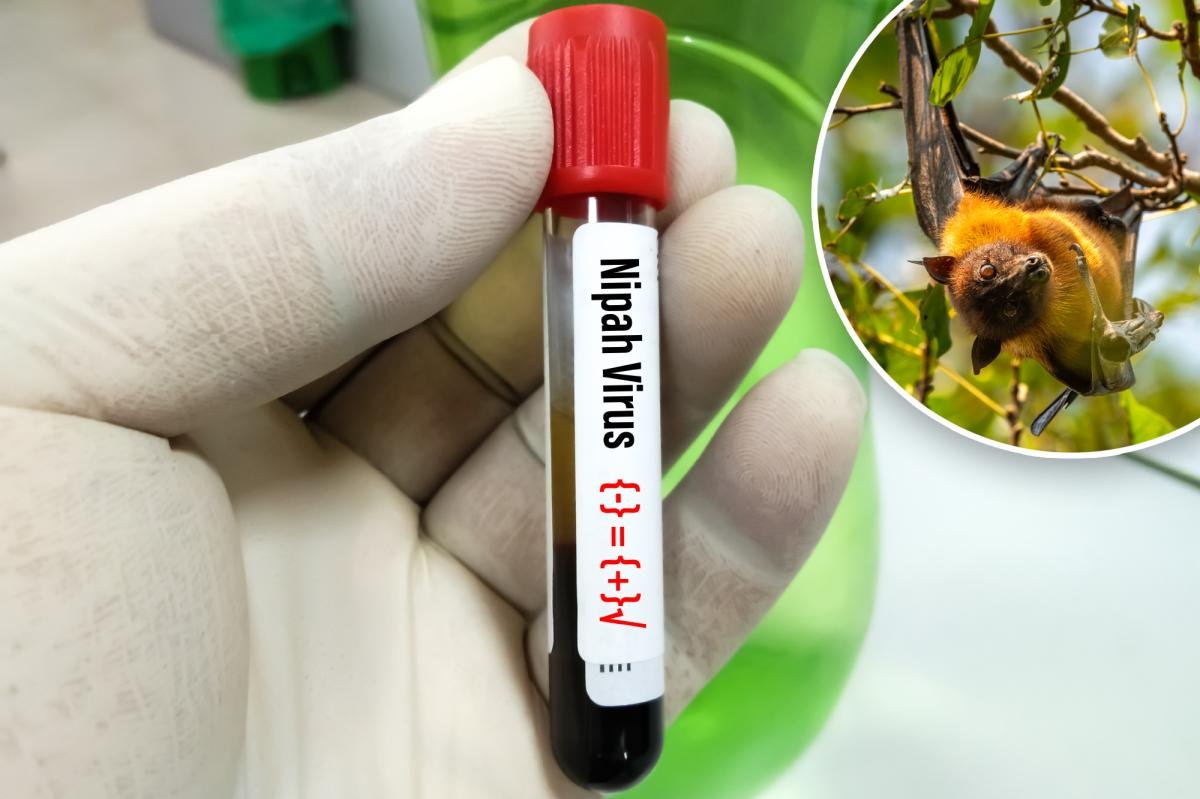
The deadly disease is mostly spread by fruit bats, but can make other animals and people sick.
Thailand’s Department of Disease Control issued a press release on Friday to emphasize that the tracking and prevention rules put in place are “to monitor and screen travelers at international communicable disease control checkpoints.”
While the WHO currently considers the virus risk low, here’s a closer look at the disease, from symptoms to treatment.
What is the Nipah virus?
Referred to as a zoonotic virus due to how it spreads between animals and people, Nipah virus is spread mainly by fruit bats (also called flying foxes) as well as pigs, goats, horses, dogs and cats.
The virus is transmitted when people or animals come into contact with bodily fluids — like blood, urine or saliva — of an infected animal or person.
It can also be transferred when someone eats food that’s been contaminated by an infected animal, most often fruit that’s fallen from trees or hasn’t been properly washed.
Where do outbreaks occur?
While infections can happen anywhere, outbreaks often happen in Bangladesh, India, Malaysia, the Philippines and Singapore.
However, the bats that carry the virus can be found throughout Asia, Australia and the South Pacific.
What are the symptoms of Nipah virus?
Initial signs of an infection typically include fever, headache, cough, trouble breathing, diarrhea, vomiting and severe weakness.
These can start anywhere between four and 14 days after being infected, with a fever and headache usually being the first symptoms, followed by difficulty breathing.
More severe cases can cause life-threatening brain infections as well as confusion, disorientation, slurred speech, seizures or coma.
Anywhere from 40% to 75% of Nipah virus cases result in death, according to the CDC.
There can also be long-term complications from infections, resulting in convulsions, personality changes or developing symptoms months or even years after exposure.
How contagious is Nipah?
This virus can spread through bodily fluids like saliva, poop, urine and blood — meaning it can be transferred through coughs and sneezes.
While it mainly spreads from animals to people, it can also be transferred from person to person as it’s easily spread through respiratory droplets.
There’s also a risk if someone gets in close contact with an infected animal or consumes raw date palm sap or fruit, as bats can leave bodily fluids on them.
How is Nipah virus diagnosed?
A doctor can diagnose Nipah after checking symptoms and discussing recent travel to any areas where the virus is common.
A real-time polymerase chain reaction (RT-PCR) test can confirm infection using samples from nasal or throat swabs, cerebrospinal fluid, urine or blood.
What is the treatment?
There are no medications to treat the virus.
What’s recommended is plenty of rest, fluids, ibuprofen or acetaminophen for fever and pain, medications for nausea and inhalers or nebulizers for difficulty breathing.
How can I prevent Nipah virus?
While there’s no vaccine, you can take precautions to prevent catching the virus.
If you travel to or live in an area where outbreaks occur often, be sure to regularly and thoroughly wash your hands with soap and water.
Avoid contact with sick bats or pigs, as well as trees or bushes where bats sleep and roost.
Wash and peel all fruits before consuming them, but throw away any fruit that’s touched the ground or has bite marks from a bat.
Read the full article here