











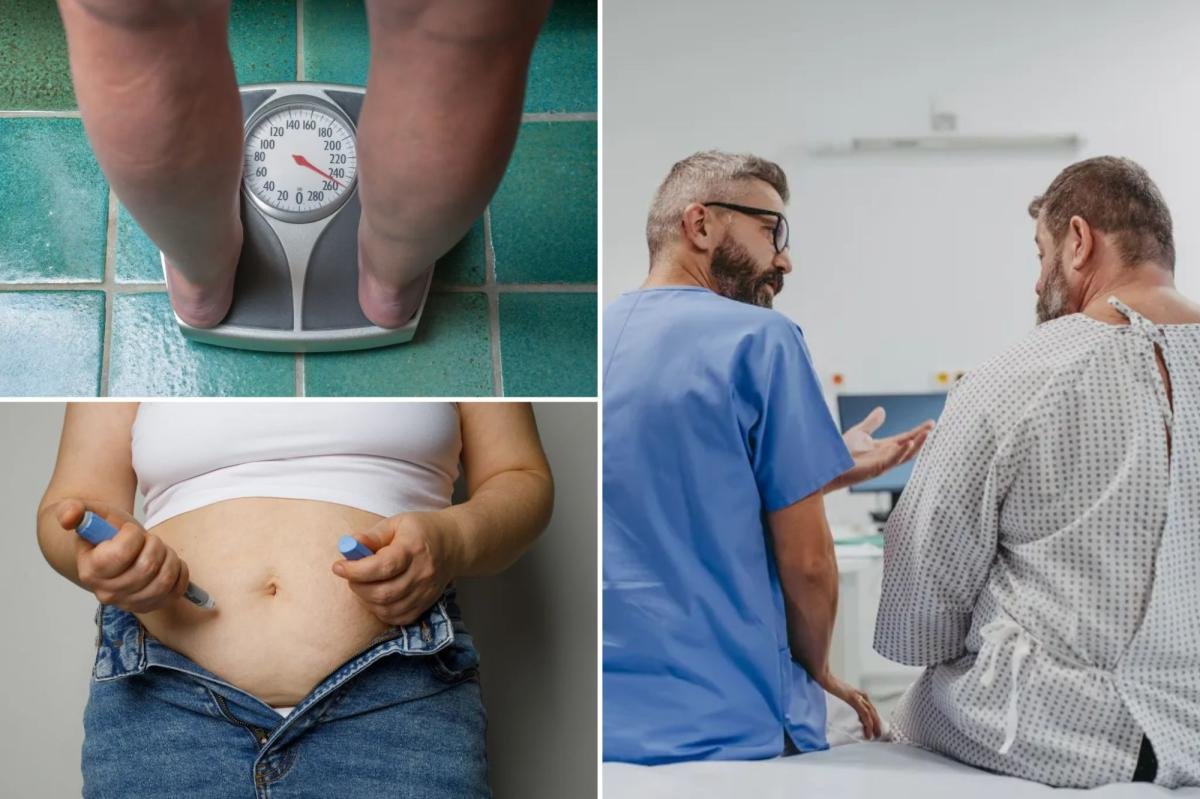
America’s obesity problem is tipping the scales.
A new study found that the share of US adults living with obesity has more than doubled over the past three decades, ballooning from 19% in 1990 to 42% in 2022.
And the country’s waistline shows no signs of shrinking. By 2035, researchers project a staggering 47% of American adults will be living with the chronic condition fueled by excess body fat.
Doctors are sounding the alarm, warning that obesity is just the tip of a dangerous iceberg, with a host of serious health problems lurking beneath the surface.
“Look at the rates of heart disease, diabetes, pulmonary disease and certain types of cancers. All of those are correlated with higher BMI,” Dr. Armando Castro-Tie, chair of surgery at South Shore University Hospital and senior vice president physician executive for the Eastern Market of Northwell Health, who was not involved in the study, said in a statement.
“If we don’t curb it, especially in the childhood and adolescent age groups, then we’re just going to be dealing with an overall more morbid population,” he continued. “Are our health care system and infrastructure equipped to handle that? Arguably, probably not.”
The study crunched decades of BMI data taken from several nationally representative surveys, tracking obesity rates from 1990 to 2022 and projecting where they’ll land by 2035.
Researchers found that in 2022 alone, more than 107 million American adults were living with obesity — an increase of roughly 72 million people since 1990.
By 2035, that number is expected to swell to 126 million adults, further straining an already overburdened health care system.
Notably, researchers stopped their analysis just before US obesity rates began to show early signs of slipping.
According to Gallup survey data released in October, adult obesity rates fell to 37% in 2025 — a drop many experts link to the explosive rise of GLP-1 drugs, including the blockbuster names Ozempic and Wegovy.
Originally developed to treat diabetes, these medications have become go-to weight-loss tools nationwide, reshaping the conversation around obesity.
A November report from KFF found that one in eight adults is currently taking a GLP-1 to lose weight or manage a chronic condition. Nearly one in five Americans say they’ve tried one at some point.
With the GLP-1 boom showing no signs of slowing — and new drugs already on the horizon — it’s unclear how much the trend will reshape America’s obesity trajectory.
But one thing is certain: Obesity isn’t spread evenly across the country.
Over the 30-year study period, researchers found major gaps by race, ethnicity and age — and those gaps are only expected to widen.
Young women experienced some of the sharpest increases overall. Among Hispanic and non-Hispanic white women, obesity rates climbed fastest in those aged 30 to 34.
For non-Hispanic Black women, the steepest rise came even earlier — ages 25 to 29 — with obesity rates jumping from 26.1% to 52.9%.
Among men, the gains were more spread out, with the biggest increases occurring between the mid-40s and early 70s, depending on the group.
State-by-state, the differences were also stark.
In 2022, women had the highest obesity rates in Oklahoma, where a staggering 54% were obese. For men, Indiana topped the list at 47.2%.
Looking ahead to 2035, the numbers get even heavier.
Obesity among women is projected to peak in South Dakota, reaching 59.5%, while Indiana is expected to hold onto its unwanted title for men, climbing to 53.6%.
Across the board, non-Hispanic Black women had the highest obesity rates in every state — in both 2022 and the projections for 2035.
Read the full article here